Platinum and gold are both premium precious metals, but platinum melting is fundamentally different from gold melting . Manufacturers who treat platinum like gold often encounter problems such as incomplete melting, oxidation, contamination, or excessive energy consumption.
Understanding these differences is essential for choosing the right melting process and equipment.
1. Melting Temperature: The Most Obvious Difference
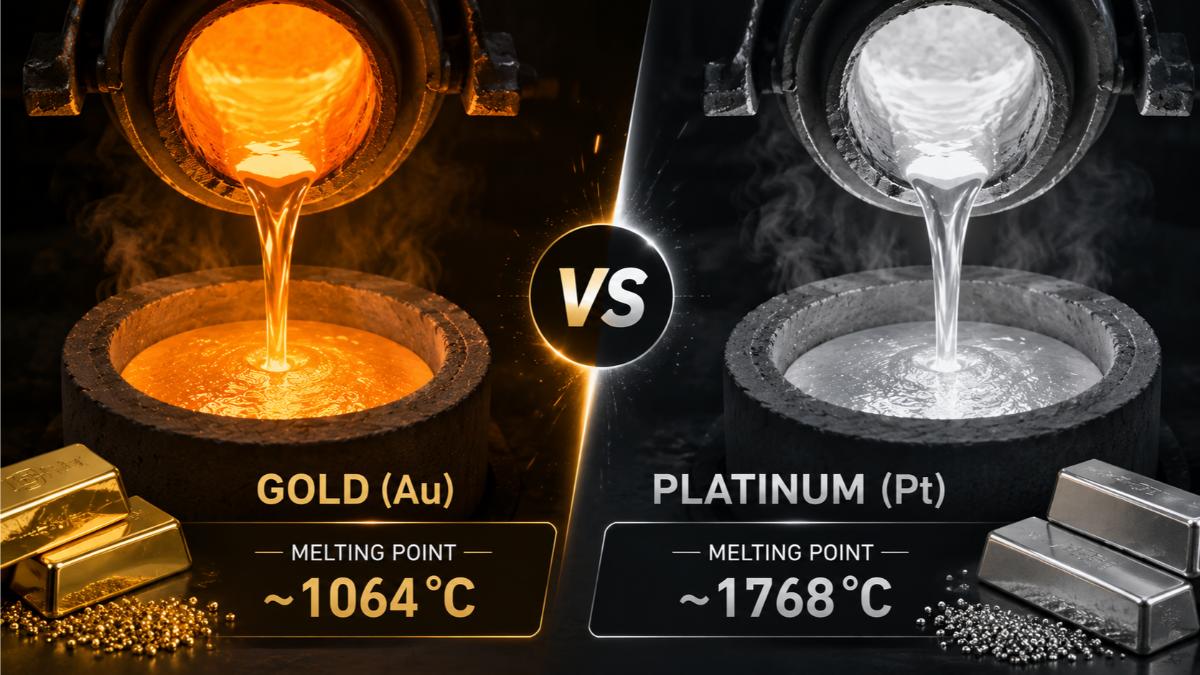
| Metal | Melting Point |
|---|---|
| Gold (Au) | ~1064°C |
| Platinum (Pt) | ~1768°C |
Platinum requires over 700°C higher temperature than gold.
This single factor changes everything—from power requirements to crucible material and heating method.
Implication:
Equipment suitable for gold melting is often not sufficient for platinum.
2. Heating Method Requirements
Gold Melting
- Resistance heating or induction heating both work well
- Fast melting, low energy loss
- Standard crucibles (graphite, ceramic) are commonly used
Platinum Melting
- Requires high-power induction heating
- Strong thermal stability and continuous high-temperature output
- Precise temperature control to avoid overheating
Key difference:
Platinum melting demands higher power density and stronger thermal control.
JUYI platinum-capable induction melting systems are designed to maintain stable high temperatures without power fluctuation.
3. Crucible and Material Compatibility
Gold
- Graphite crucibles are widely used
- Low risk of chemical reaction
- Easy handling and long service life
Platinum
- Highly reactive at extreme temperatures
- Graphite contamination risk
- Requires special ceramic or platinum-compatible crucibles
Even minor contamination during platinum melting can affect color, purity, and mechanical properties.
4. Oxidation and Atmosphere Control
Gold is relatively forgiving during melting and can be processed in open air with flux protection.
Platinum, however:
- Oxidizes more aggressively at high temperatures
- Absorbs impurities easily
- Requires inert gas protection (argon or nitrogen) or vacuum conditions
This is why vacuum or protected-atmosphere melting is strongly recommended for platinum.
5. Energy Consumption and Process Stability
- Gold melts quickly with moderate energy input
- Platinum requires:
- Longer heating time
- Higher continuous power
- Better insulation and thermal efficiency
Unstable heating can lead to:
- Partial melting
- Grain structure damage
- Equipment stress and shorter service life
JUYI melting systems emphasize energy efficiency and thermal stability, especially for high-melting-point metals.
6. Operational Tolerance and Process Margin
| Aspect | Gold | Platinum |
|---|---|---|
| Process tolerance | High | Low |
| Temperature window | Wide | Narrow |
| Equipment demand | Moderate | High |
| Risk of defects | Low | High if uncontrolled |
In short:
Gold is easy to melt well. Platinum is not.
7. Equipment Selection: Why Platinum Needs More Than “Gold-Level” Machines
For manufacturers processing both metals, it is critical to understand:
- A gold melting machine can melt gold perfectly
- The same machine may fail or degrade rapidly when used for platinum
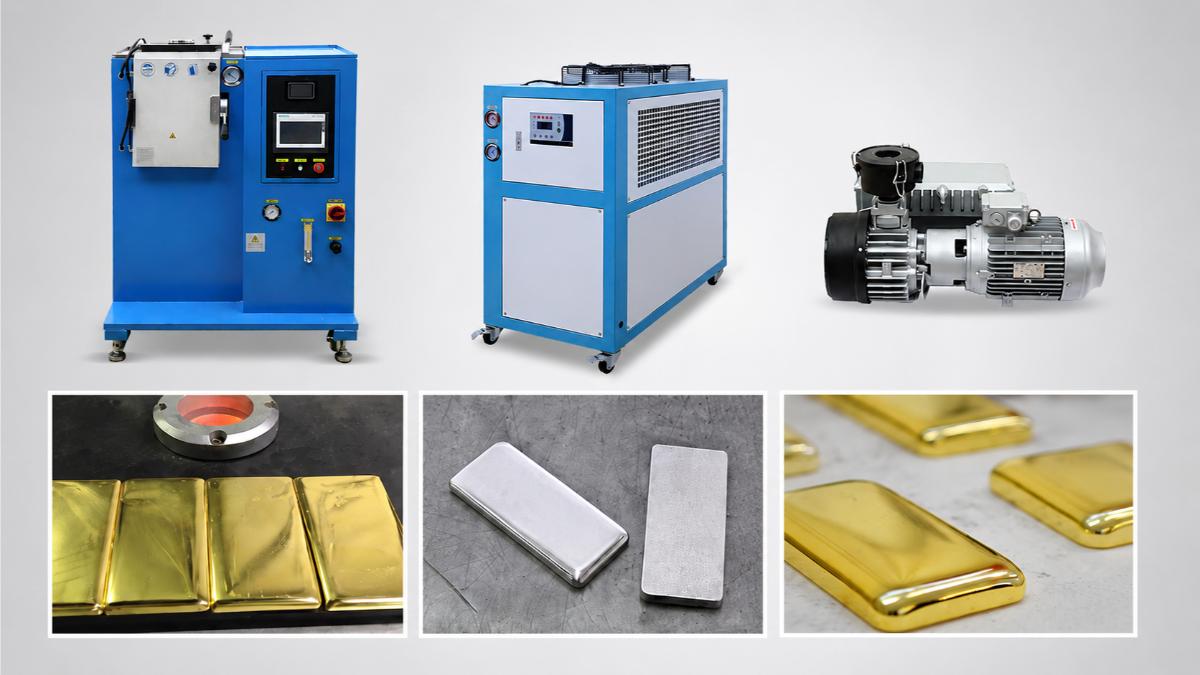
JUYI designs melting equipment with:
- Sufficient power reserve
- High-temperature stability
- Vacuum or inert gas compatibility
This ensures one system can reliably handle both gold and platinum, without compromise.
Conclusion
The difference between platinum melting and gold melting is not just temperature—it’s process discipline, equipment capability, and material control.
- Gold melting is forgiving and flexible
- Platinum melting demands precision and stability
Understanding these differences helps manufacturers:
- Reduce material loss
- Improve metal quality
- Extend equipment lifespan
With proper process design and the right melting system, platinum can be melted just as reliably as gold—but only when treated with the respect it requires.