Introduction
Gold bullion is commonly categorized as cast or minted, but these terms describe form and finishing—not purity or intrinsic value.
Understanding the difference helps investors and bullion buyers choose the right product based on cost, appearance, and use case.
1. What Is Cast Gold Bullion?
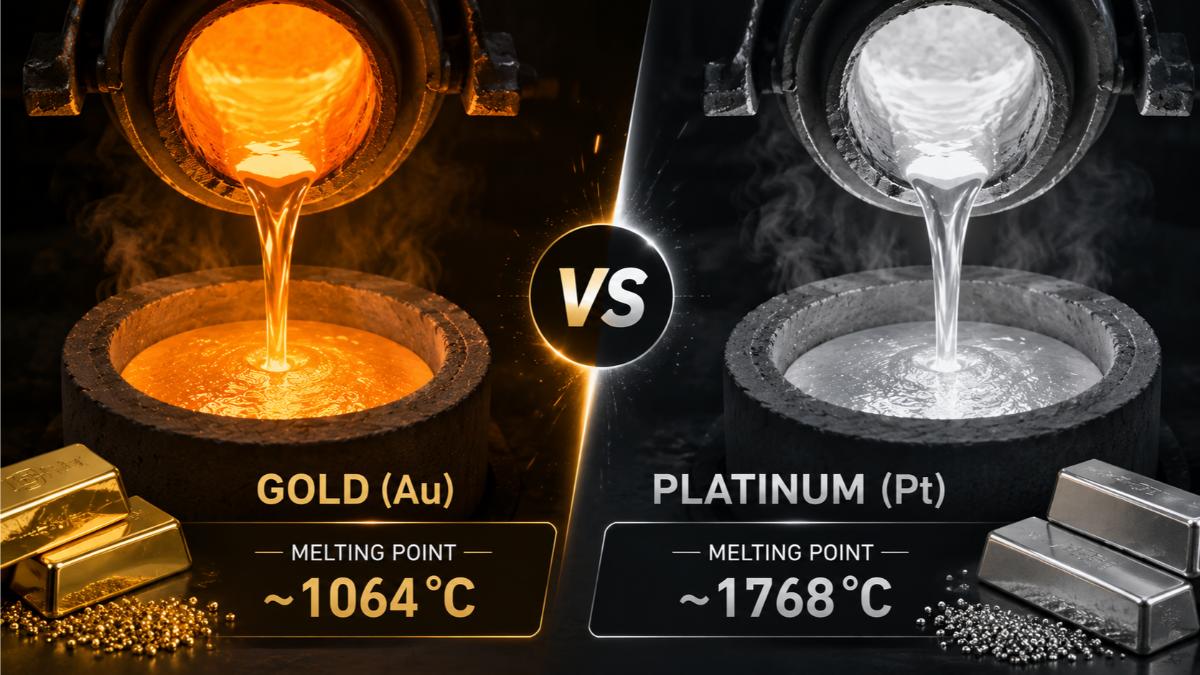
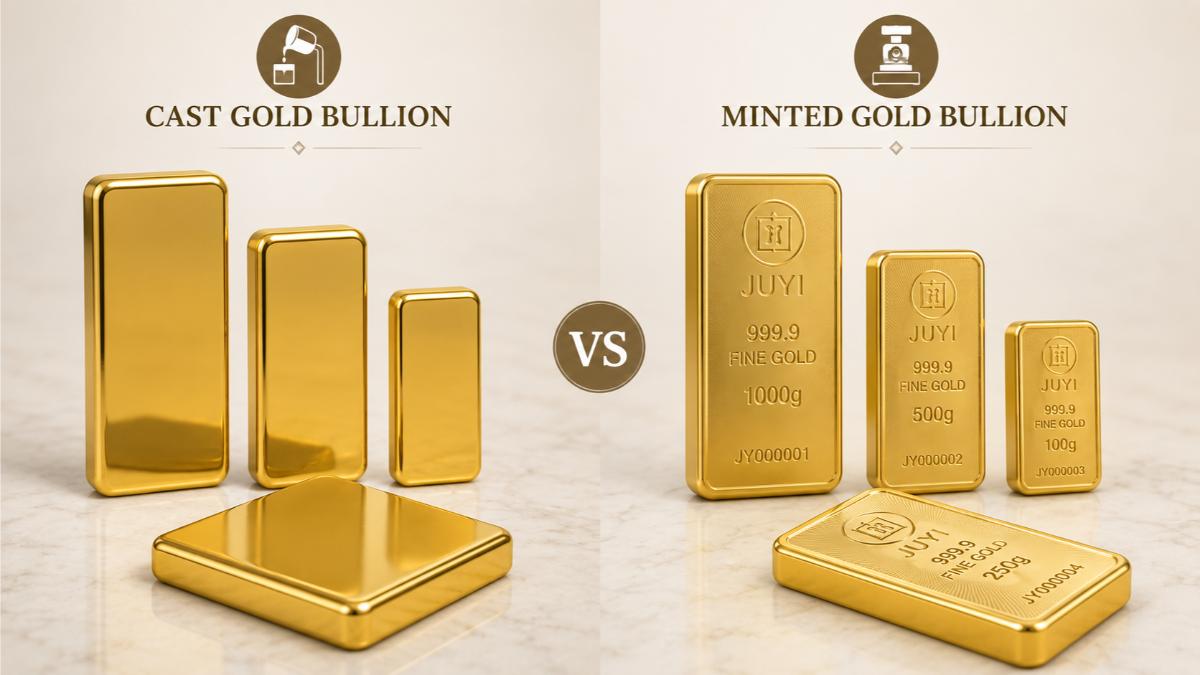
Cast gold bullion is produced by pouring molten gold into a mold and allowing it to solidify.
Key Characteristics
- Formed directly from molten metal
- Slight variations in shape and surface texture
- Often used for medium to large bar sizes
- Generally lower production cost and premium
Cast bullion is widely accepted in global markets and valued primarily for metal weight and purity.
2. What Is Minted Gold Bullion?
Minted gold bullion is produced through a multi-step mechanical process:
- Gold is cast into slabs or bars
- Rolled into precise thickness
- Cut into blanks
- Struck under high pressure with dies
Key Characteristics
- Smooth, polished surface
- Precise dimensions and sharp edges
- Detailed branding and security features
- Higher production cost and premium
Minted bullion is especially popular in retail investment markets.
3. Cast vs Minted Gold Bullion
| Feature | Cast Bullion | Minted Bullion |
|---|---|---|
| Manufacturing Method | Direct casting | Rolling & striking |
| Surface Finish | Natural | Polished |
| Dimensional Precision | Moderate | High |
| Production Cost | Lower | Higher |
| Premium Over Spot | Lower | Higher |
| Typical Bar Sizes | Medium to large | Small to medium |
4. Which One Is Better?
Neither cast nor minted bullion is inherently better.
- Cast bullion is ideal for investors focused on weight, purity, and cost efficiency.
- Minted bullion suits buyers who value appearance, branding, and ease of resale in smaller denominations.
Both contain the same intrinsic gold value when purity and weight are equal.
Conclusion
The difference between cast and minted gold bullion lies in how they are made and how they look—not in their intrinsic worth.
Choosing the right type depends on your investment goals, budget, and market preference.