Introduction
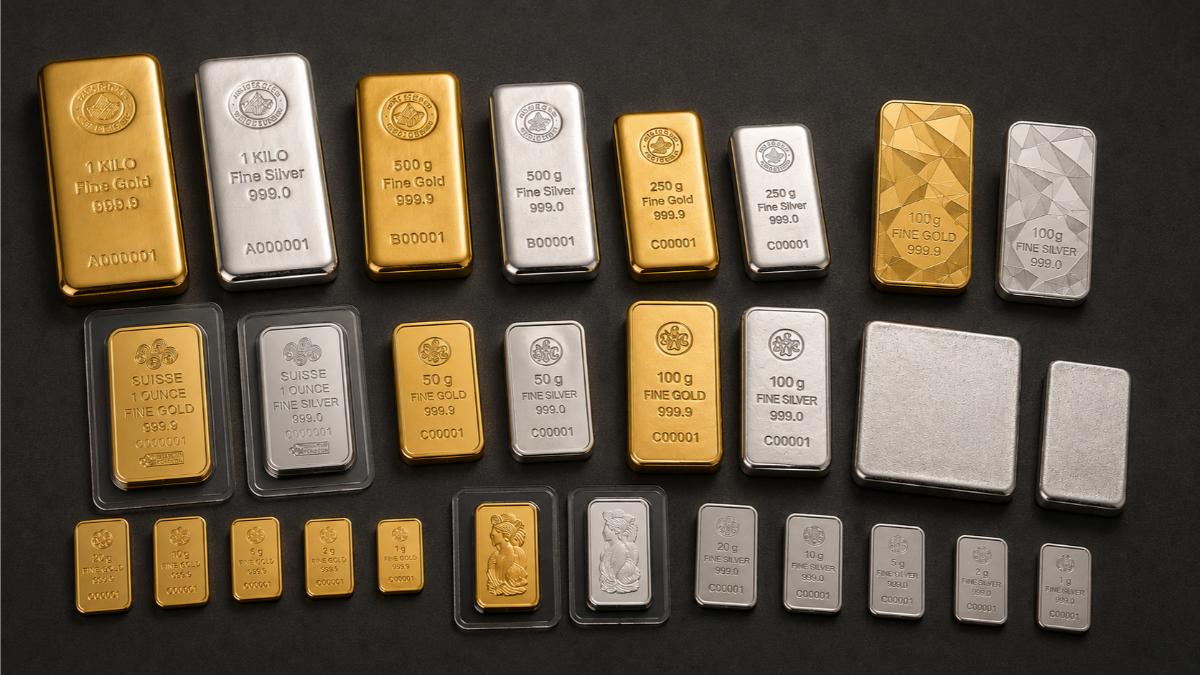
Bullion casting has been used for centuries, but not all casting methods deliver the same metallurgical quality.
As bullion markets demand higher density, cleaner surfaces, and consistent internal structure, vacuum bullion casting has emerged as a decisive technological upgrade.
This article explains the fundamental differences between traditional bullion casting and JUYI’s vacuum bullion casting solution, and why controlled vacuum environments matter.
1. Traditional Bullion Casting: Process and Constraints
Traditional bullion casting typically follows a straightforward process:
- Metal is melted in a crucible or furnace.
- Molten metal is transferred or poured into a mold.
- Casting and solidification occur under atmospheric conditions.
Key Limitations
- Exposure to oxygen during melting and pouring
- Risk of gas absorption and oxidation
- Possible shrinkage cavities and internal porosity
- Density uniformity depends on operator skill
- Surface finish often requires post-treatment
While suitable for basic bullion production, process stability and internal quality are inherently limited.
2. JUYI Vacuum Bullion Casting: Integrated & Controlled
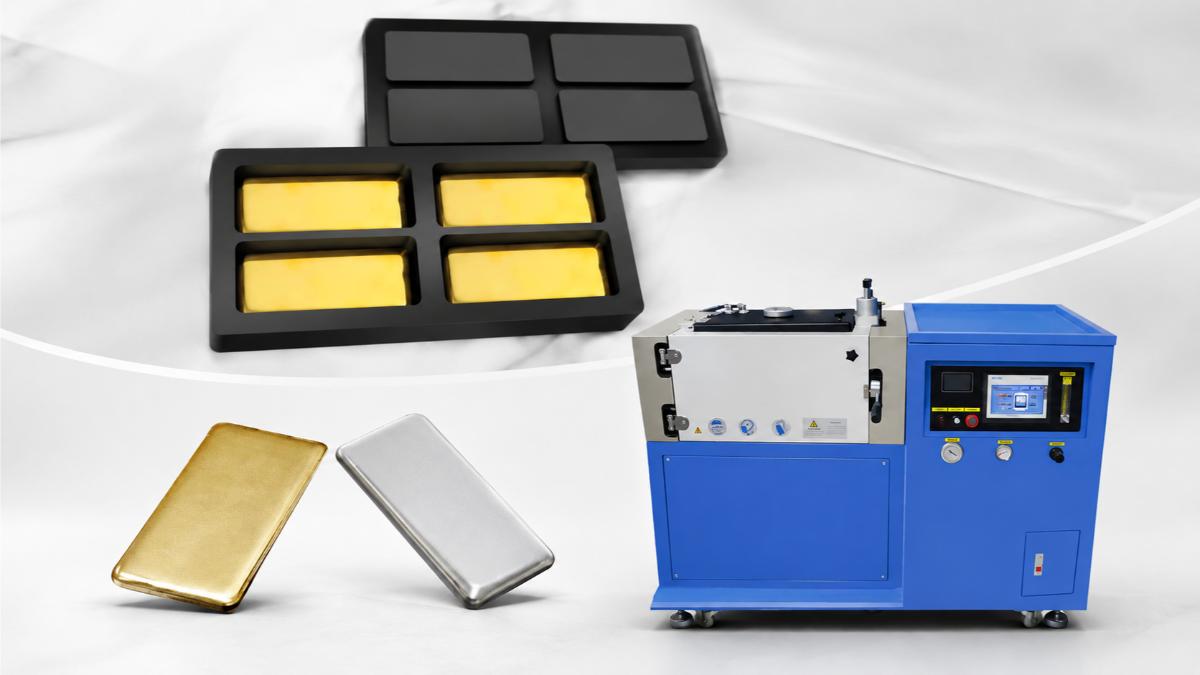
JUYI’s vacuum bullion casting solution is engineered around a single-core principle:
Melting and casting occur in one sealed chamber under continuous vacuum or inert gas protection.
What Makes the Difference
One-Chamber Melting and Casting
- No transfer of molten metal between vessels
- Reduced contamination and metal loss
- Higher weight accuracy and yield
Full Vacuum Environment
- Oxygen and moisture removed before melting
- Prevents oxidation and gas entrapment
- Ensures clean metal chemistry
Uniform Density, No Porosity
- Controlled metal flow under vacuum
- Stable solidification conditions
- Produces bullion with high density and internal consistency
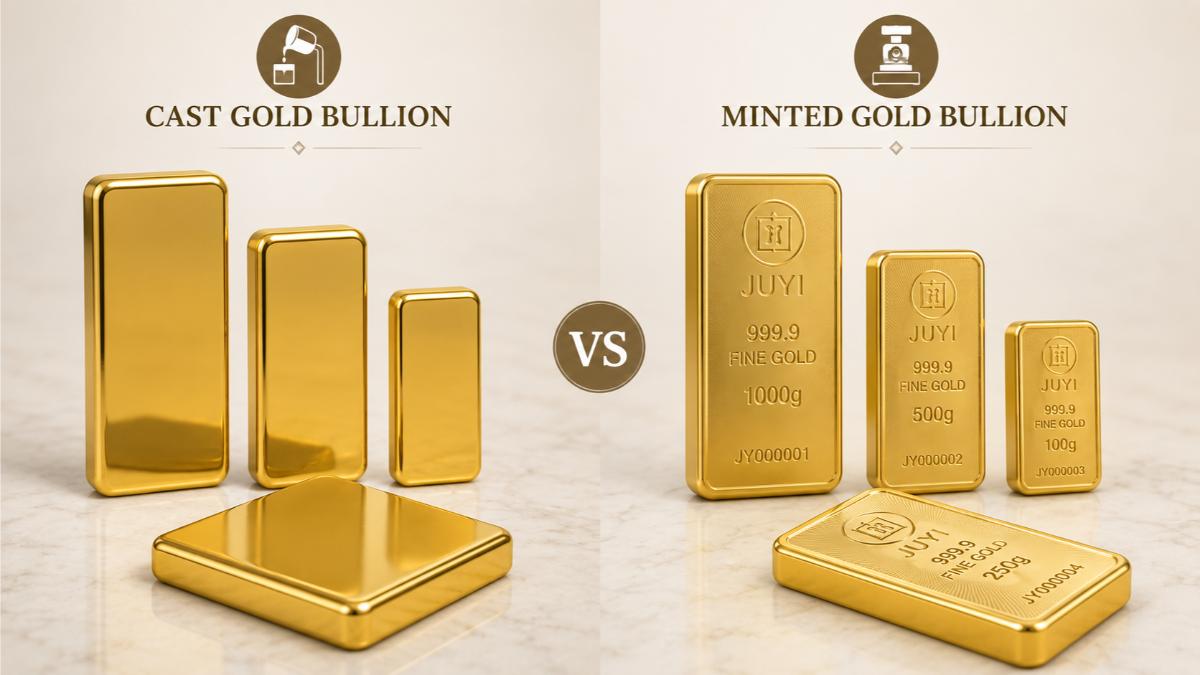
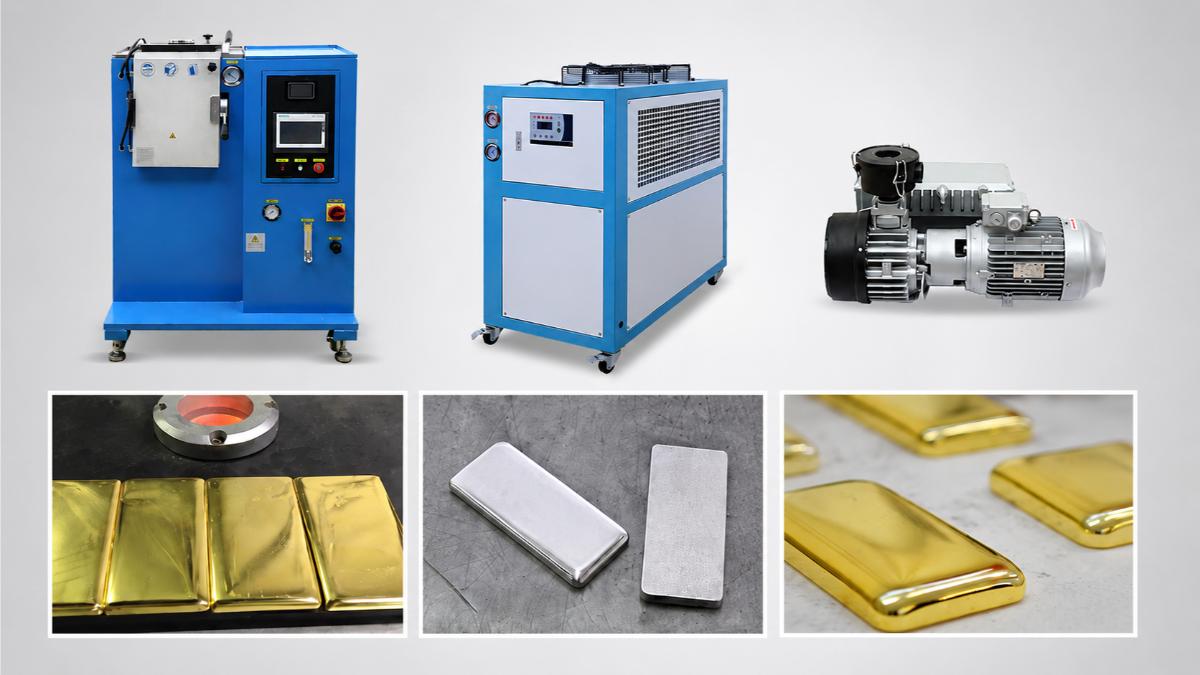
Bright, Clean Surface Finish
- Smooth mold filling
- Minimal oxidation on the surface
- Results in naturally bright bullion bars without heavy polishing
3. Traditional vs JUYI Vacuum Bullion Casting
| Aspect | Traditional Bullion Casting | JUYI Vacuum Bullion Casting |
|---|---|---|
| Casting Environment | Atmospheric | Full vacuum / inert gas |
| Melting & Casting | Separate steps | Integrated in one chamber |
| Oxidation Risk | Moderate | Extremely low |
| Porosity | Possible | Eliminated |
| Density Consistency | Variable | Highly uniform |
| Surface Appearance | Dull / uneven | Bright & clean |
| Process Control | Operator dependent | System controlled |
Conclusion
Traditional casting methods meet basic production needs, but modern bullion markets require more than basic casting.
JUYI’s vacuum bullion casting solution delivers:
- Cleaner metallurgy
- Uniform density
- Bright, professional-grade bullion surfaces
- Stable, repeatable production
This is casting evolved, designed for refineries and bullion producers who demand consistent quality at scale.