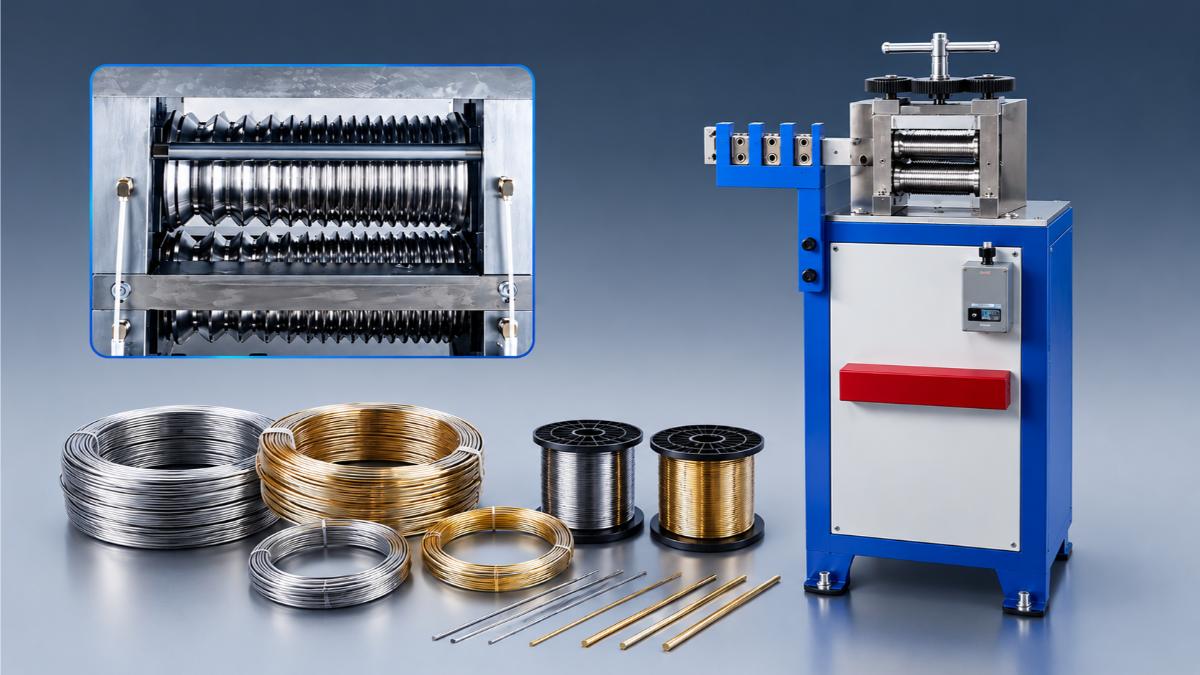
In metal processing, wire drawing and wire rolling are two key techniques used to produce wires and metal strips from various materials, including gold, silver, copper, and their alloys. While both processes transform raw metal into usable forms, they differ significantly in their working principles, applications, and advantages.
Wire Drawing Machine
Principle:
Wire drawing is a metal forming process in which a metal wire or rod is pulled through a series of dies to reduce its diameter and increase its length. The process can be done cold or hot, depending on the material, and often requires lubrication to minimize friction and prevent surface defects. In modern setups, wire drawing machines use multi-stage dies and tension control systems to achieve precise diameters.
Applications:
- Manufacturing fine gold, silver, and copper wires for jewelry and electronics
- Producing industrial wires for electrical, construction, and mechanical applications
- Wire ropes, springs, and cable cores
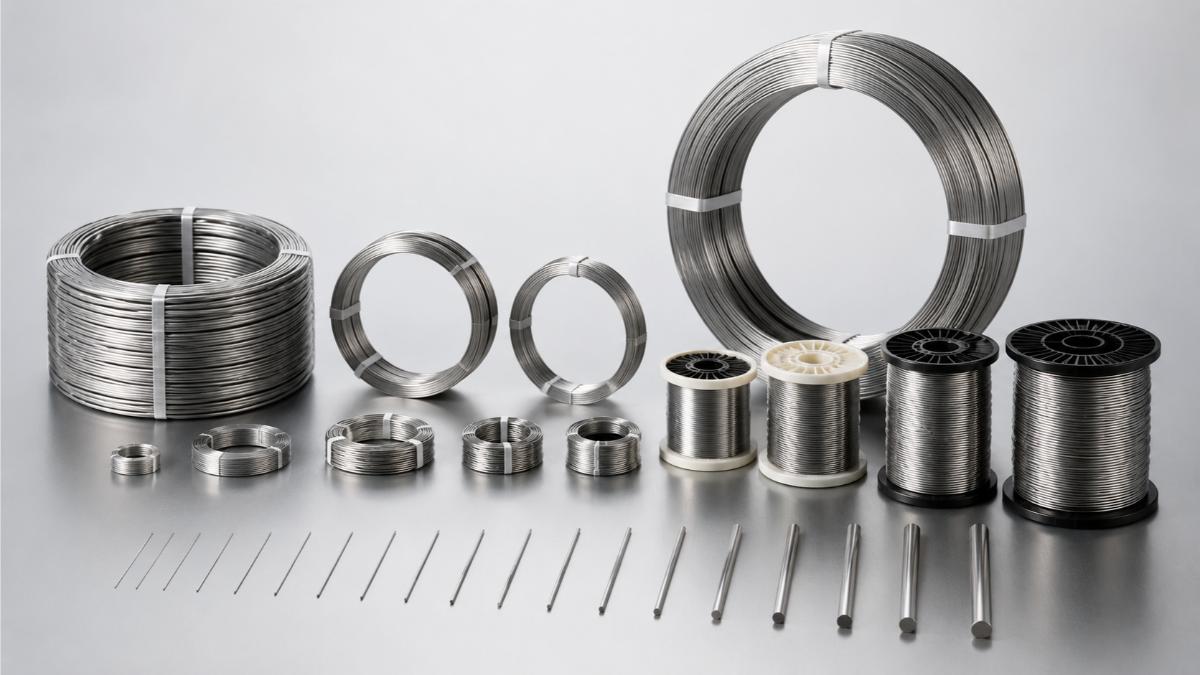
- Specialty wires such as platinum, stainless steel, and alloy wires
Advantages of Wire Drawing:
- Achieves high precision diameter control, often down to microns
- Produces smooth surface finish suitable for further processing
- Can handle small to very fine wires, ideal for jewelry and electronics
- Allows material strengthening through work hardening
Wire Rolling Machine
Principle:
Wire rolling, also called rod or wire rolling, is a metal forming process in which a metal billet or rod is passed between rotating rollers to reduce its cross-sectional area and elongate it. Unlike drawing, rolling mainly compresses the material rather than pulling it, and is typically used for larger diameter rods or wires. Rolling machines can have single, double, or multiple rollers, and can produce square, rectangular, or round wires.
Applications:
- Producing metal rods, wires, and strips for jewelry, electrical, and construction industries
- Manufacturing raw materials for wire drawing machines
- Producing medium to large diameter wires for industrial use
Advantages of Wire Rolling:
- Handles larger diameters more efficiently than drawing
- High production speed and cost-effective for bulk wire
- Can produce various wire shapes beyond round, such as square or rectangular
- Reduces metal waste compared to cutting or machining
Wire Drawing vs. Wire Rolling – Key Differences
| Aspect | Wire Drawing | Wire Rolling |
| Principle | Pulls wire through dies to reduce diameter | Passes metal through rollers to compress and elongate |
| Applications | Fine wires, jewelry, electronics | Rods, medium/large wires, raw wire stock |
| Advantages | High precision, smooth surface, fine wire capability | High efficiency, large diameter handling, shape flexibility |
| Material Size | Small to very fine wires | Medium to large wires or rods |
| Process Type | Tensile pulling | Compression/rolling |
Conclusion
Both wire drawing and wire rolling machines are essential in modern metal and jewelry manufacturing. Wire drawing excels in precision, fine wire production, and surface quality, while wire rolling is ideal for high-efficiency, bulk production, and larger wires or rods.
Choosing the right equipment depends on the material type, wire diameter, and production scale. For manufacturers in the jewelry and precious metal industries, integrating both processes ensures a complete metal forming solution, from rod or sheet stock to precision fine wire.